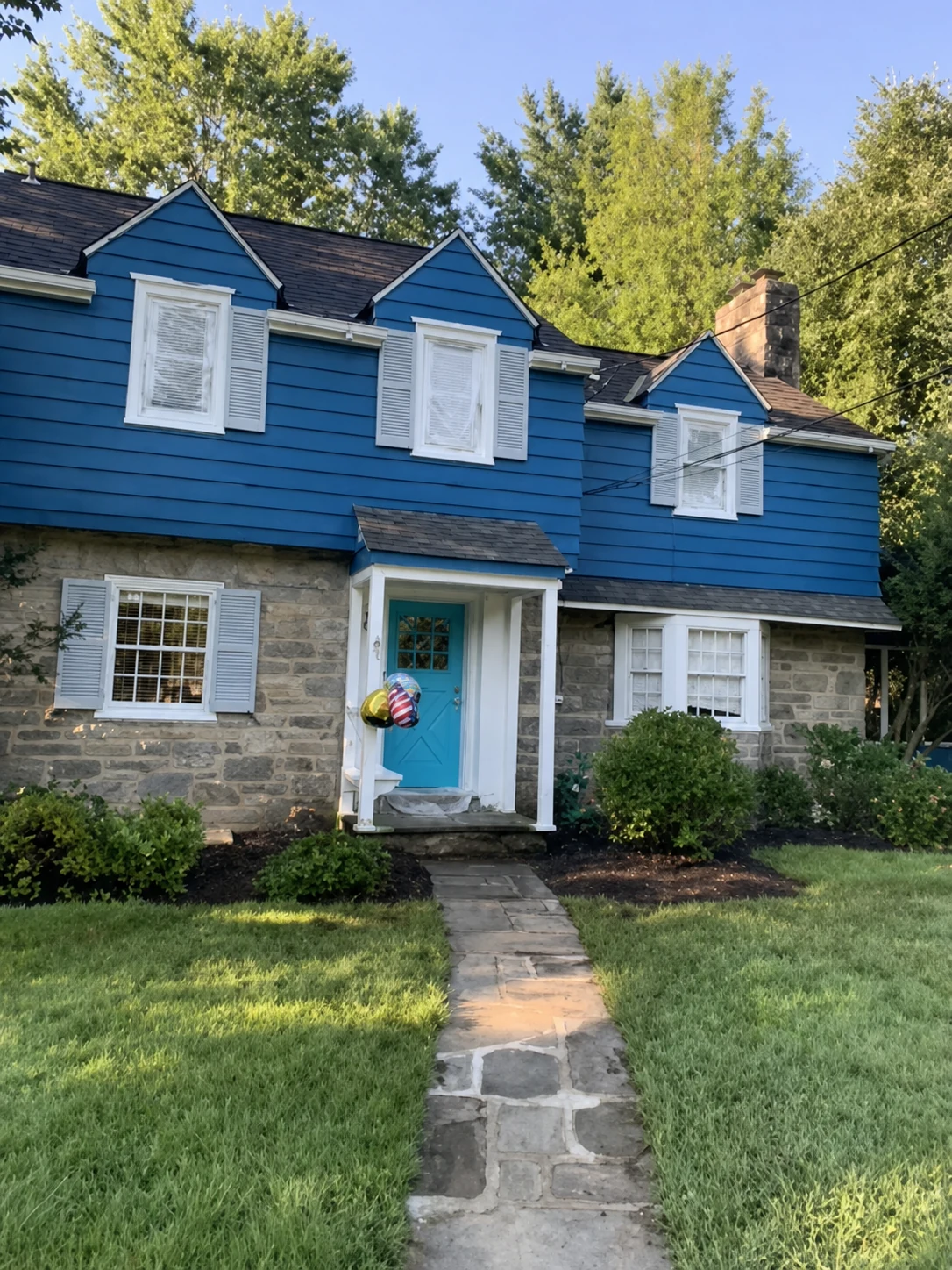
Breathable Exterior Finishes for 18th-Century Stone Homes
Exterior Painting in Chester Springs, PA
By the third spring, a repainted stone farmhouse shows you how well the last crew understood it. A finish that sealed the wall shut, trapping moisture inside the stone, starts lifting along the same courses every year, usually down low where the ground holds moisture against the base. LX Pro Home evaluates the wall before picking a product: where dampness collects, where the old mortar has gone soft, whether the ground sits too high against the base. The next repaint should be a repaint, not a rescue.
Prevent Trapped Moisture With Specialized Fieldstone Exterior Painting in Chester Springs
Engineered specifically for historic masonry and outbuildings, breathable coatings eliminate trapped moisture while elevating curb appeal.
Historic Chester Springs properties have significantly more exterior surface area than typical suburban homes—and much of it predates the nation. Here are the three factors that determine how long your exterior paint will last:
Stone, Mortar and What's Behind Them
Historic lime mortar needs to breathe, and soft joints must be repaired with period-correct materials before any finish goes on. Identifying damp spots and ground-clearance issues tells us precisely which coating to apply and what order to work in.
Wood Trim, Doors and Shutters
Sound wood trim, doors, and shutters are scraped, sanded, primed, and painted. Soft sills, open shutter joints, or other structural deterioration are identified during the walkthrough and must be repaired before coating.
Barns and Outbuildings
Outbuildings often bear the heaviest weather damage while going the longest without maintenance. We include bank barns, spring houses, garages, and sheds in the same estimate as the house, giving you a complete picture of your property’s needs.
Our exterior season runs from March through November, and an estate with outbuildings demands far more time on the calendar than a standard residential home. Between expansive masonry, extensive trim, and the extra drying time required for power-washed stone, these projects require careful scheduling. Securing an early-spring slot ensures your most repair-heavy walls get the benefit of warm summer weather rather than the cold edge of late autumn.
Surface temperature matters far more than the daily weather forecast. Paint coatings require a wall temperature above 50°F to cure into a durable protective film. A tree-shaded north wall can stay cold long after the ambient air warms up. We measure the temperature directly off the stone and rotate around the house to follow the sun, ensuring every side is painted under optimal conditions.
What Farmhouse Owners Ask About Exteriors
Can the stone itself be painted?
The stone itself can be painted, but on most Chester Springs farmhouses it shouldn't be. Bare fieldstone and lime mortar were built to pass moisture through, and a coating on the face traps it inside the wall, where it does far more damage than weathering ever would. If stone has already been painted by a previous owner, there are breathable finishes that keep it moving. We'll tell you which situation you're in before recommending anything.
Our last exterior only lasted four years. What went wrong?
An exterior that only lasted four years almost always failed underneath rather than on top. The usual causes are a wall that wasn't dry when it was coated, a finish that sealed a surface when it needed to breathe, or soft wood that was filled and painted instead of replaced. We look for all three at the estimate, because the fix is different in each case and none of them is solved by better paint.
Does the ground level around the house matter?
Yes, the ground level around the house matters significantly. When soil, mulch, or a flowerbed sits directly against a stone foundation, it holds moisture against the masonry. That trapped wetness travels up the wall and pushes paint off from behind, causing the same lower section to peel year after year. It’s often a quick fix with a shovel to pull the grade back, and we’d always rather help you fix the root cause than repeatedly repaint the same three feet of wall.
Fix the Root Cause of Peeling Exterior Paint
Trapped moisture, soft mortar, and high soil levels destroy paint from the inside out. We evaluate the property in person and provide a line-item proposal covering masonry preparation, sound-wood preparation, and breathable coatings, while flagging structural repairs outside the painting scope.
Exterior work books March through November; the early-spring slots go first on properties this size.