
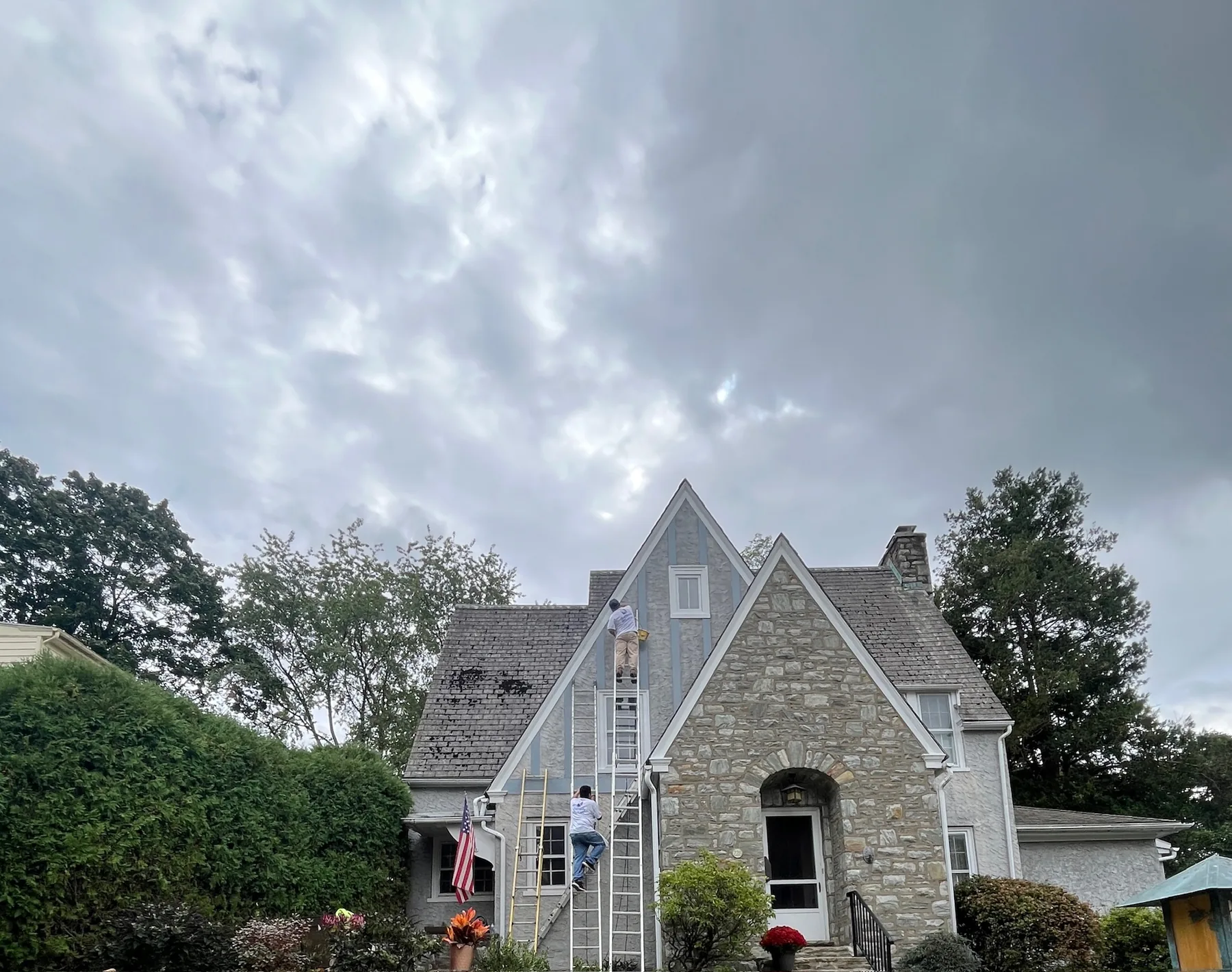
Siding & Stucco Fields
Wood, fiber cement, aluminum and stucco washed down to a clean, sound surface, then cracks and spalling patched and coated in a film thick enough to move with the wall through a full year of expansion and contraction.
LX Pro Home paints exteriors on Chester County homes. We work on sound siding, stucco, trim, fascia, shutters, and doors, from one elevation to a whole house. Chalk gets washed off, surfaces are prepared, and joints are sealed before coating. Rot or structural deterioration is identified during the estimate and must be repaired before painting.
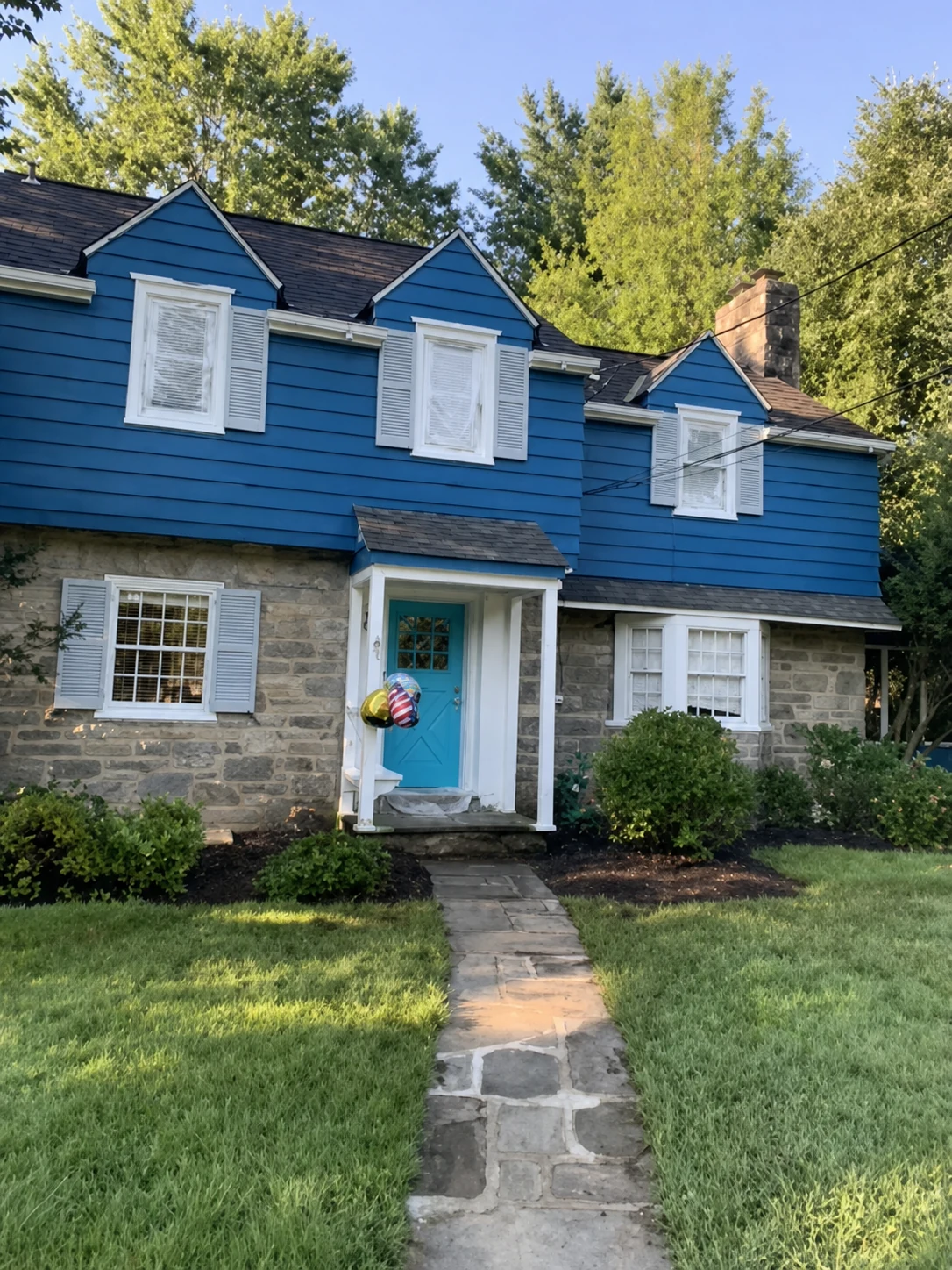
To deliver a durable finish, we focus on four key exterior areas—prepping each surface properly before a single drop of paint goes on:
Wood, fiber cement, aluminum and stucco washed down to a clean, sound surface, then cracks and spalling patched and coated in a film thick enough to move with the wall through a full year of expansion and contraction.
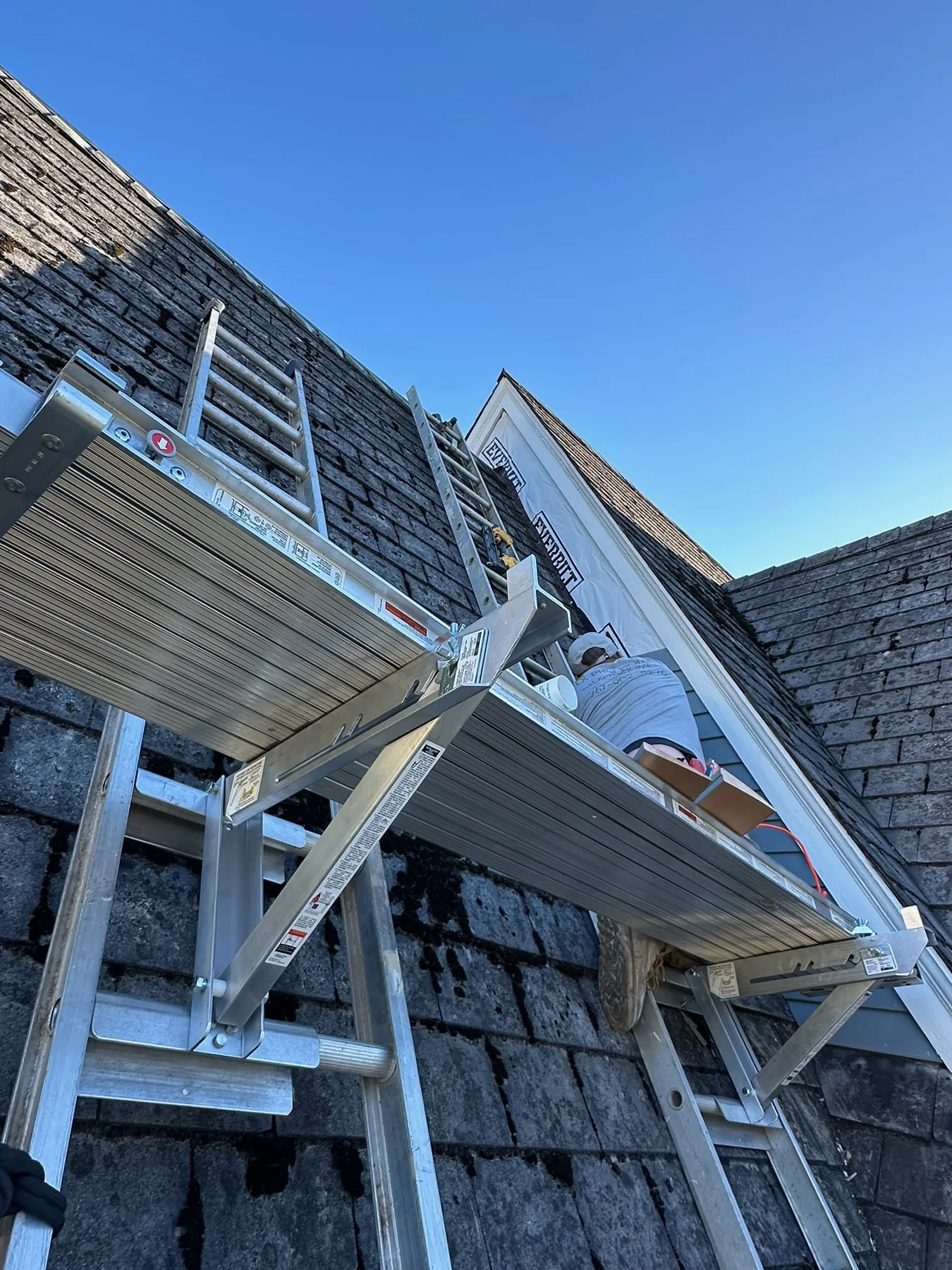
These are the first places that give out. We scrape, sand, caulk, prime, and paint sound fascia, sills, and corner boards. Deterioration that requires structural wood repair is identified during the estimate and must be corrected before coating.
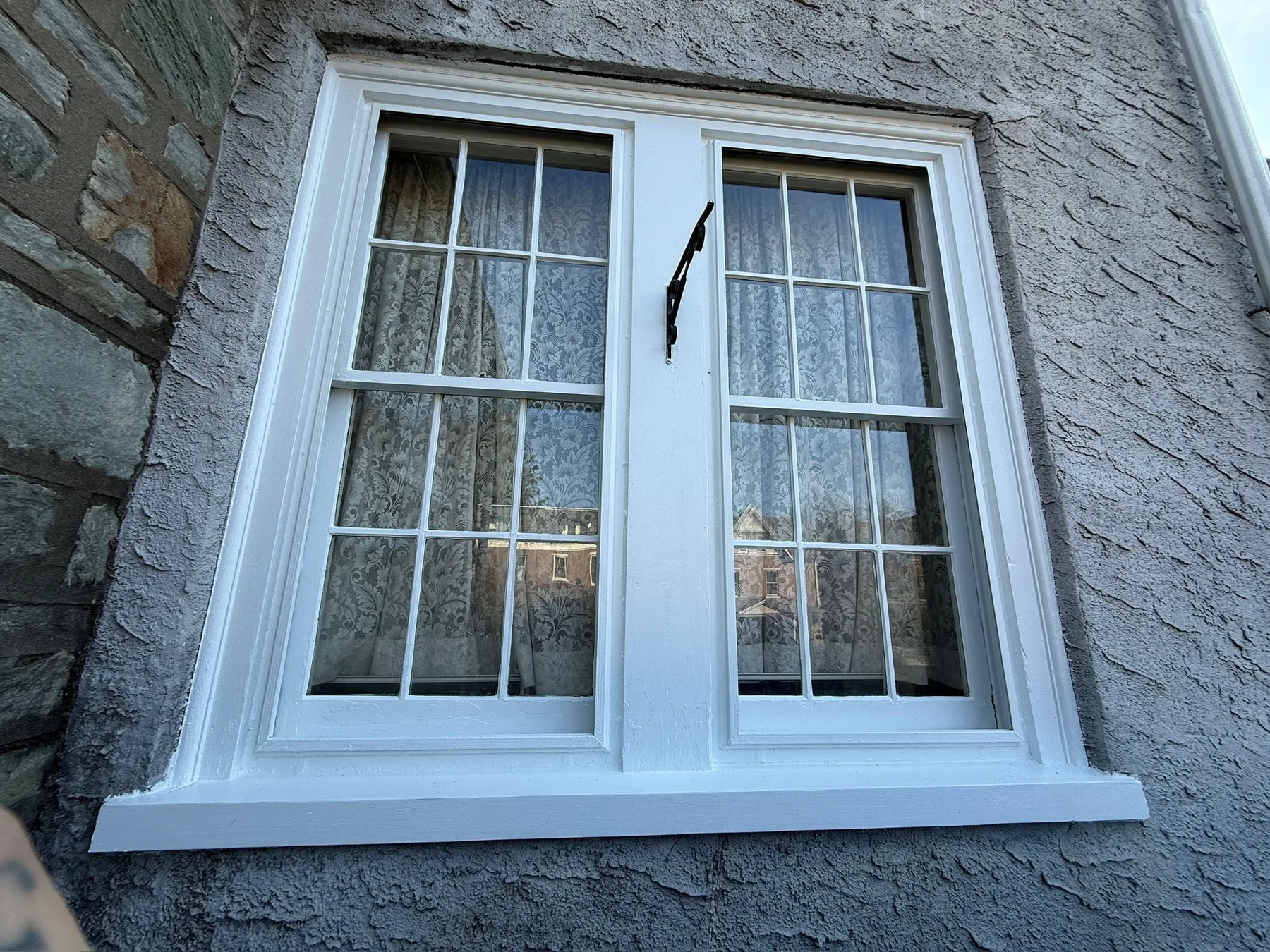
Sound shutters, entry doors, and window sash are carefully prepared and finished. Loose joints, distorted components, or structural damage are identified before painting so the appropriate repair can be completed first.
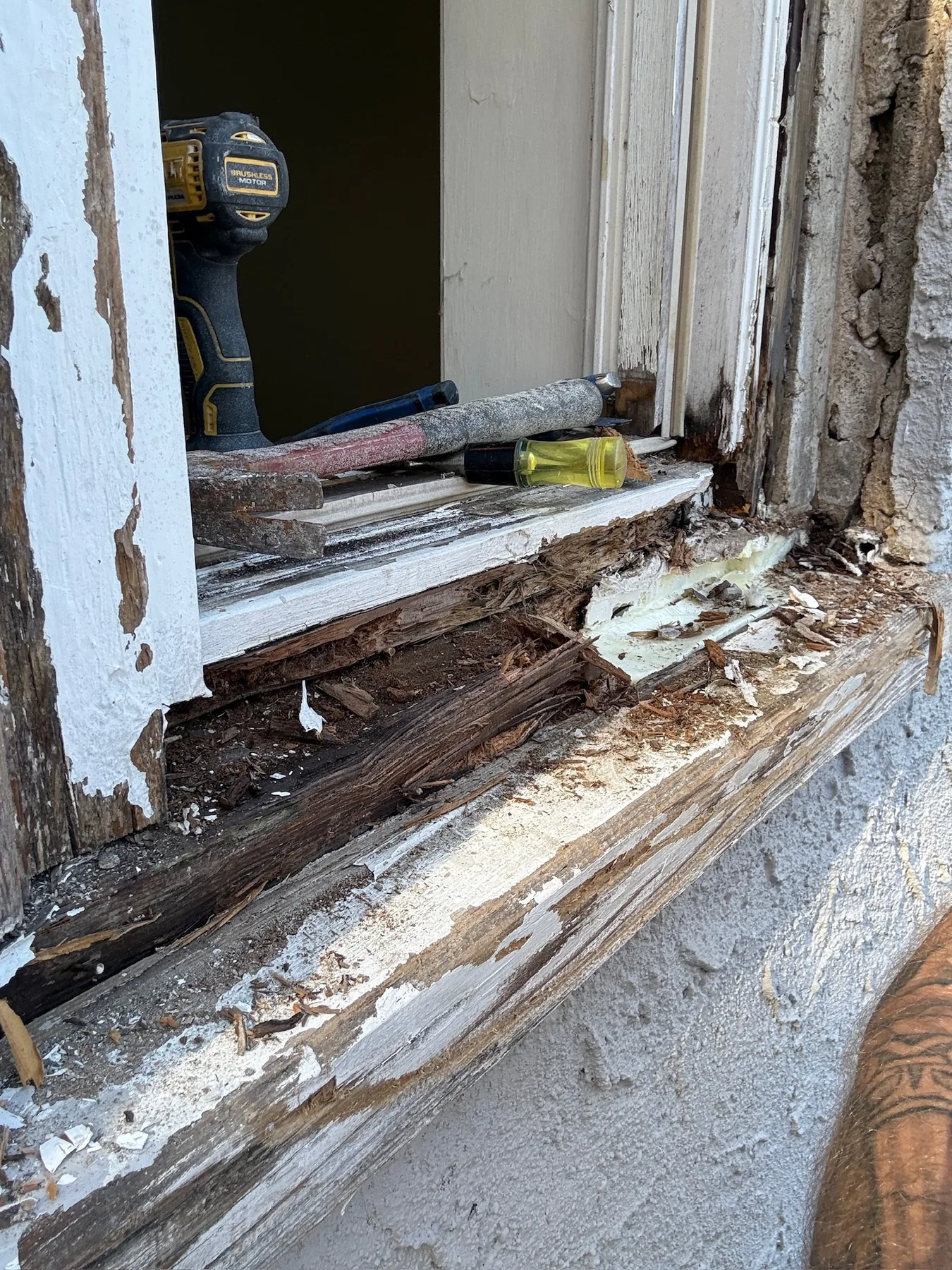
Every window surround, material transition and open joint raked out and resealed. Moisture seeps into these gaps, so closing them keeps your home sealed and protects your paint from failing prematurely.
Walk your own house before anyone quotes it. Most of what a crew will find is visible from the ground once you know what you’re looking at.
| What you're seeing | What's behind it | What it needs |
|---|---|---|
| Chalk that comes off on your hand | UV has broken down the binder in the old coating | Washing, then a bonding primer before any topcoat |
| Fascia ends and sill noses gone gray and soft | Water sitting in exposed end grain | Cutting back to sound wood and rebuilding the piece |
| Caulk split open at window surrounds | Joints moving through freeze-thaw cycling | Raking out the joint, resealing, then priming it |
| Paint peeling away in sheets to bare wood | Coated over damp or unprimed substrate | Stripping the elevation and priming from the surface underneath |
| Cracks running off window corners in stucco | Flashing details failing behind the cladding | A moisture inspection before anyone quotes paint |
Southeastern Pennsylvania cycles between wet summers and freezing winters, a constant shift that expands and contracts every surface on your house. When an exterior coating can’t flex with those changes, it cracks, giving water a direct path inside.
Around window corners, those cracks usually mean moisture is already trapped behind the stucco. A fresh coat of paint will only seal it in. Because few places in the country see more moisture-driven stucco damage than Chester County, we always recommend getting an independent moisture inspection before hiring anyone for a repaint.
The cost of an exterior repaint depends on the surface area, story height, the condition of the wood and stucco, and how much of the old coating has to come off before anything new goes on. We measure every elevation during the free in-home estimate and itemize the required paint preparation before you see a total. Structural repairs outside our scope are identified before scheduling.
How long the crew stays depends on the number of elevations, the surface preparation revealed after washing, and the drying days between stages. Weather matters too. We stop when the surface drops below temperature rather than pushing a coat on to protect a completion date.
Our exterior season ends in November because coatings need a surface above 50 degrees to cure into a durable film, and surface temperature reads differently from the forecast. A shaded north elevation stays cold long after the air has warmed, and gives that heat back the moment the sun drops behind the treeline. Paint applied to a cold wall looks right on the day and lets go at the first hard winter. Interior and renovation work runs year-round, so a December call turns into a plan for the inside of the house and a place on the spring calendar.
A pre-1978 house changes how the exterior work gets contained. Any job disturbing more than 20 square feet of exterior paint falls under the EPA's Renovation, Repair and Painting rule, which governs how the ground is covered, how chips and dust are collected, and how the site is cleaned at the end of each day. Scraping a single elevation clears that threshold.
Schedule your free perimeter walkthrough. We’ll measure your home, test your surfaces for rot or failing paint, and hand you an itemized written estimate, giving you total transparency.
The calendar fills up fast between March and November. Reserve your spot today.
Get a Free In-Home Estimate Call (267) 902-8276