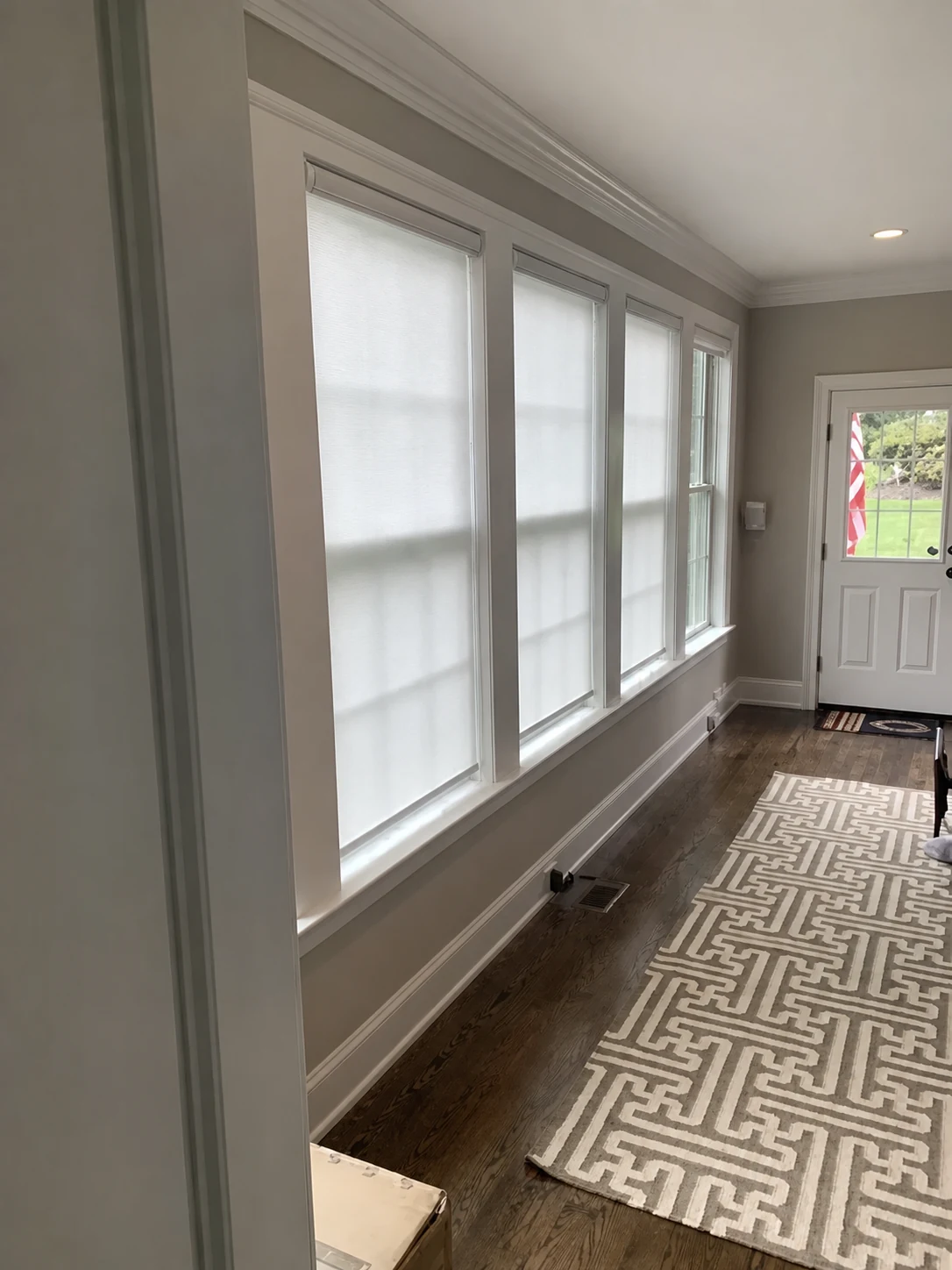
Open a closet door in one of these houses and the paint history is right there on the jamb: layer over layer, laid down by different hands across generations. Behind it the walls are plaster and the trim is deep. We repair the plaster and prepare sound trim and window surfaces before a finish coat goes on.
Interior Painting Built for West Chester's Attached Rowhouses
Plaster repaired, deep trim brought back to a hard edge, windows freed to open again.
In a narrow attached house you take in most of a finish at once: front room into the hall, hall up the stairs, every wall landing using the same trim. Three things decide whether it reads as one piece.
Plaster Walls
A wall patched by three different hands will show all three through a fresh coat. Failed sections get cut out, floated flush, and spot-primed so the repair stops showing through.
Deep Trim & Casing
Victorian trim profiles fill in after enough coats. We sand sound trim back to a defined edge, fill minor surface chips, and prime. Sections that require replacement are identified during the walkthrough and can be addressed through the approved trim-installation scope.
Painted-Shut Windows
A window painted solid into its frame is the one detail no color choice can carry. We score the seam, work it loose, clean the stops, and finish it so it closes cleanly instead of gluing shut again.
Nearly every interior in the borough went up before drywall existed, and plaster behaves differently under a brush. It moves with the house, cracks along old repairs, and lets go of the lath in places—none of which a topcoat will hide. That's why prep comprises most of the job.
Color works differently here too. Rooms in an attached house are narrow and open into each other, so a shade rarely sits on its own. A chip picked under showroom light behaves differently on a plaster wall at four in the afternoon. We paint samples on your walls, look at them at the hours you actually use the room, and pick the sheen by surface. Plaster walls, deep casing, and original windows each absorb and reflect paint differently.
What Owners of Pre-War Interiors Ask
Should we strip the trim, or paint over it one more time?
Complete stripping is rarely necessary. On most homes, thorough sanding is enough. We knock down old gloss, smooth built-up edges, fill minor chips, and prime sound trim. Sections that require replacement are identified during the walkthrough and can be priced within the approved baseboard, casing, or crown installation scope.
Can you do one floor at a time instead of the whole house?
Yes, and that’s actually how many of our clients prefer to do it, especially those who live in narrow attached homes where moving furniture between floors is tough. We can quote your project room-by-room or floor-by-floor, completing each stage entirely before moving to the next. We save your exact paint colors, sheens, and formulas on file, ensuring the second floor matches the first seamlessly whenever you're ready for stage two.
See the Color on Your Own Plaster Before You Commit
The in-home visit costs nothing and ends with a written scope: the plaster repair, the sash work, and the color and sheen chosen for each surface, room by room. Interior work runs year-round in the borough, which makes the cold months the easiest stretch to book.